THE MOST ADVANCED SOFTWARE FOR
Venture Capital & Private Equity
TRUSTED BY





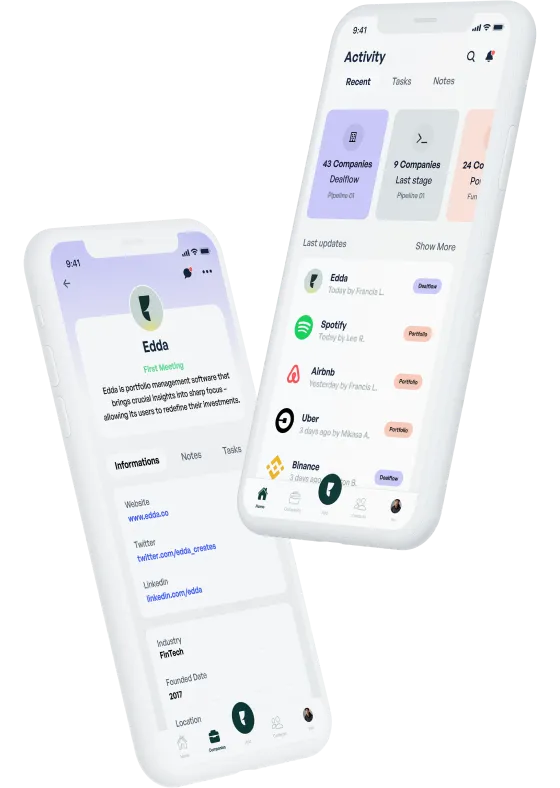
Edda brings a new level of transparency and efficiency to investment management
Our venture capital software is designed for people who want to streamline their deal flow and investment management process, all while gaining valuable insights from their data.

Centralised Investment Management
Edda consolidates investment data into one platform, improving accuracy and eliminating multiple systems. Our venture capital software provides a comprehensive view of your portfolio for better tracking, analysis, and decision-making.
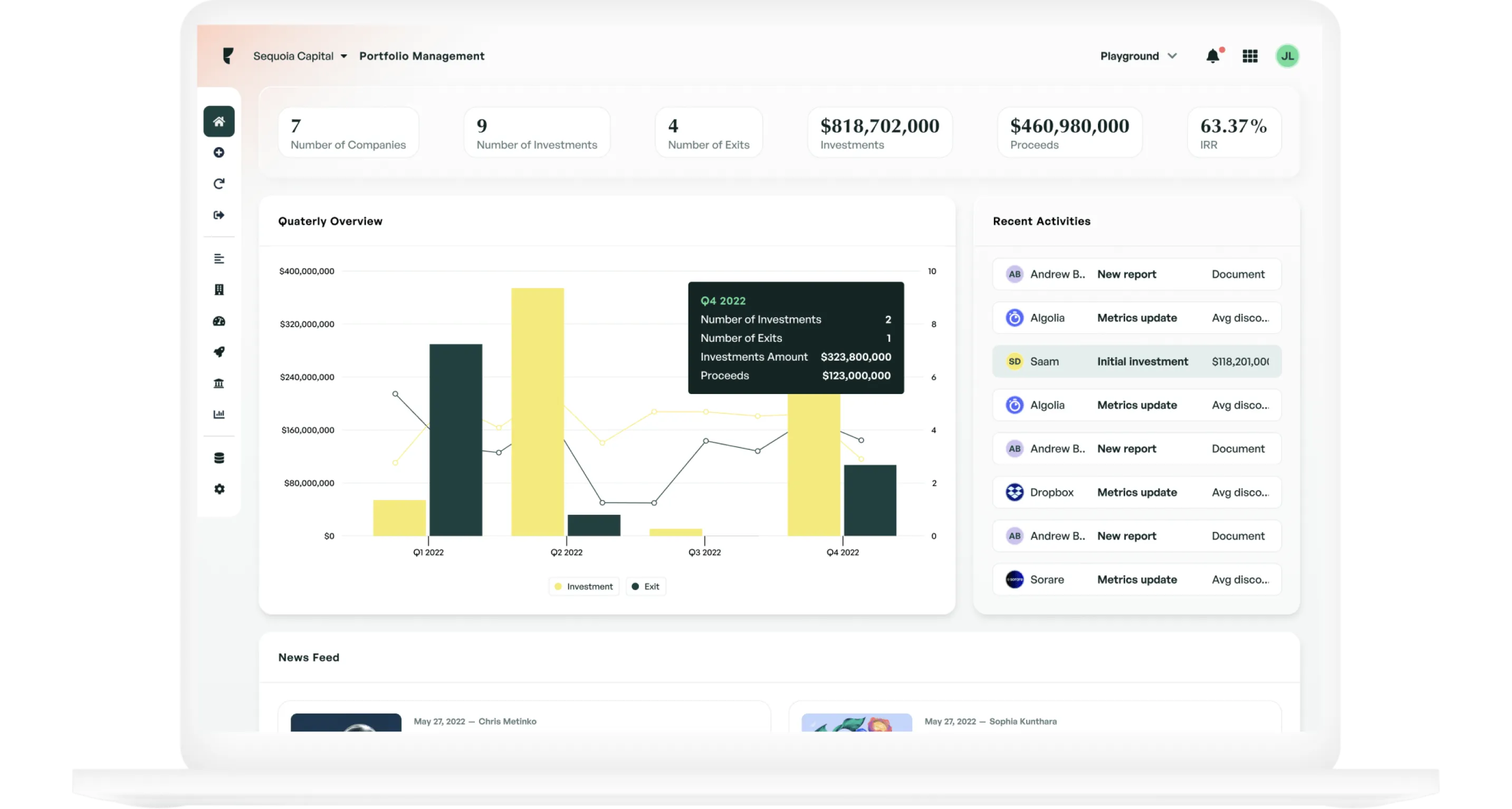
Insightful Design for Maximum Results
Our slick design provides access to advanced analytics and fully customisable dashboards, while real-time updates mean no more manual data entry. Make better informed investment decisions with the latest company information and trends in venture capital.
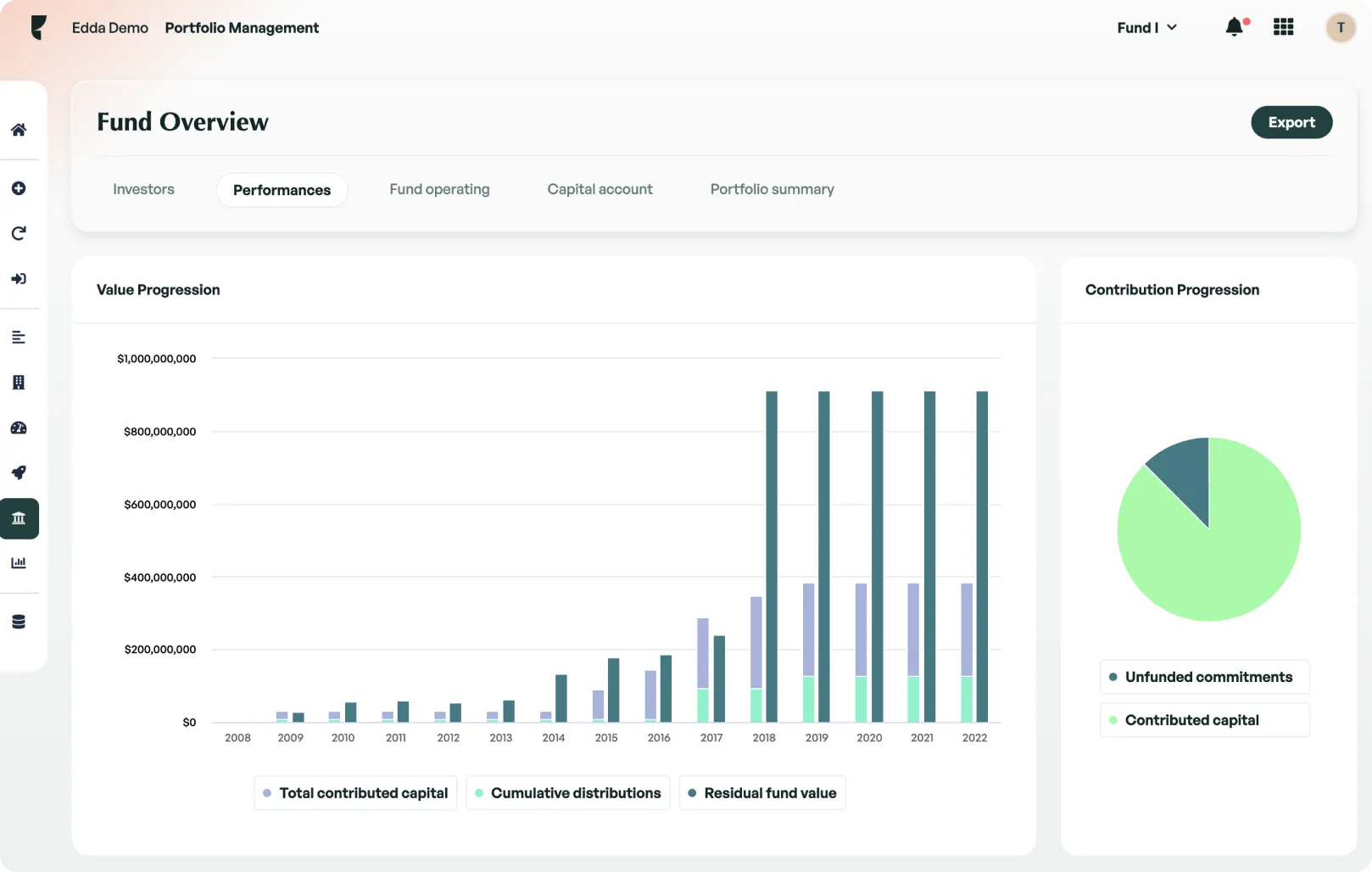
Efficiency and Automation
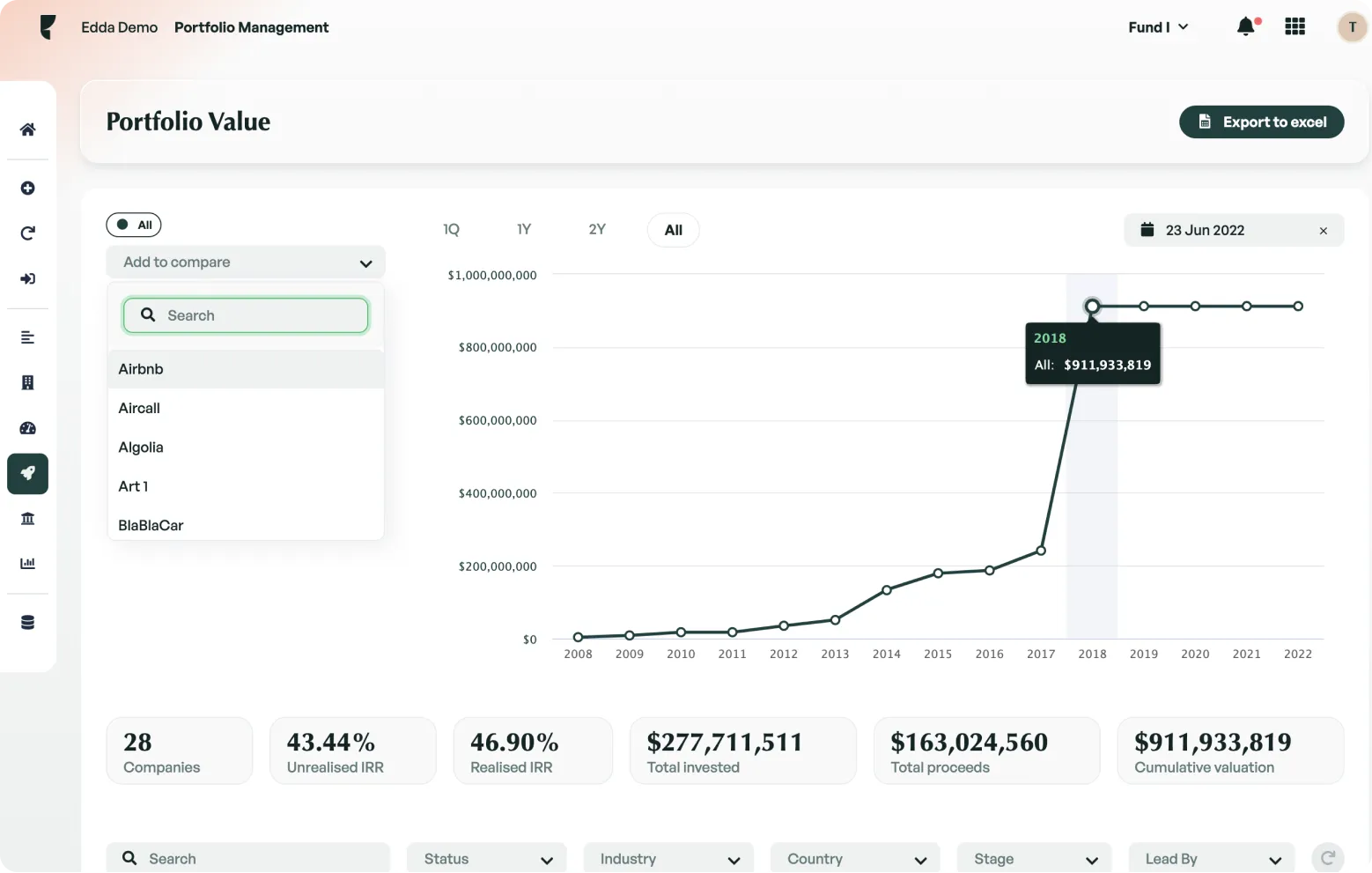
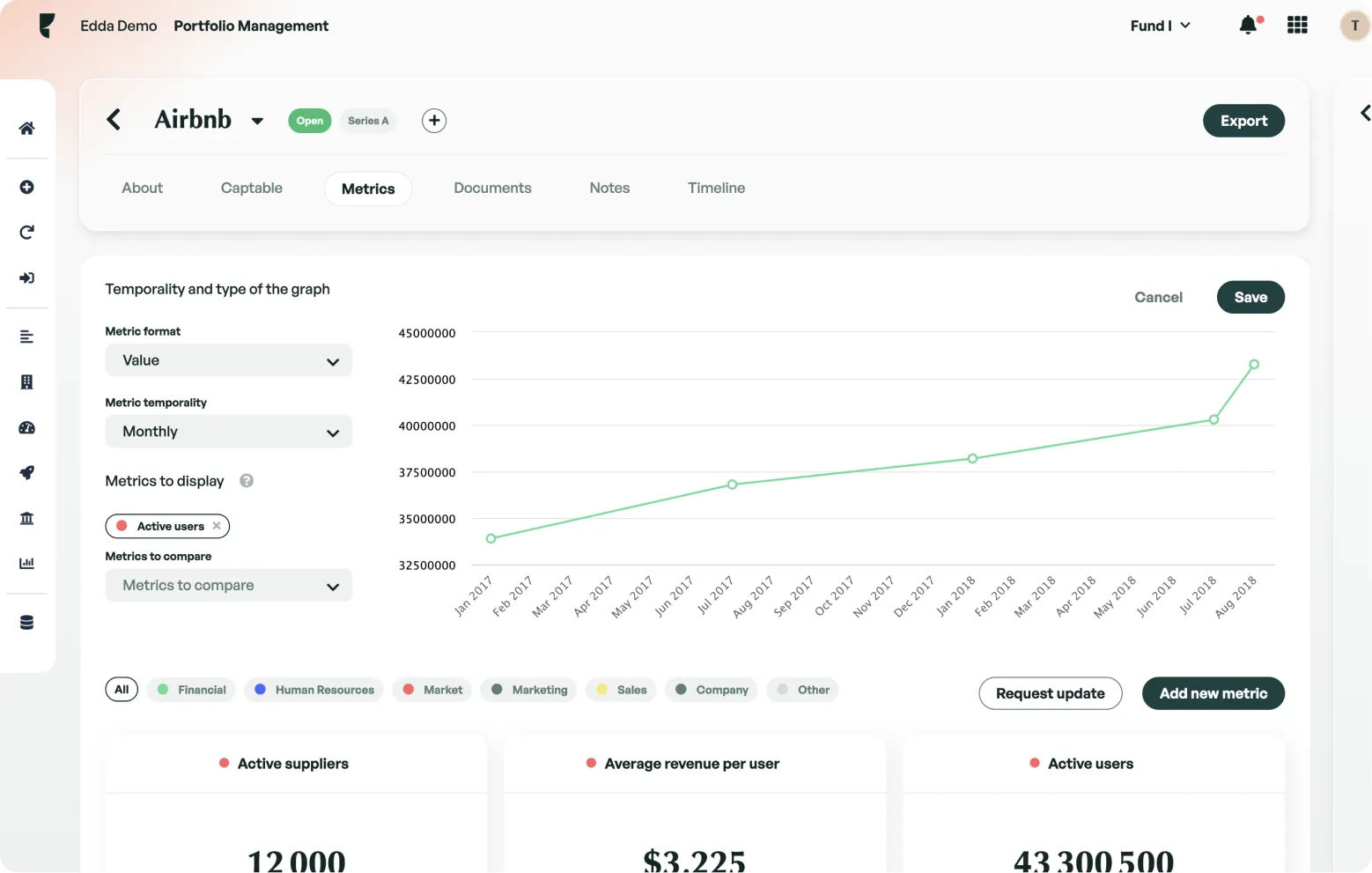
We streamline data management, automate reporting, and optimise your processes. With Edda’s Dealflow software, you can screen more deals in less time through accelerated venture capital due diligence. With Portfolio, you can run comparisons of company valuations and instantly calculate IRR. All of this adds up to less time spent on manually compiling data, and more time for your team to focus on the important things.
Request a demo
Data Insights
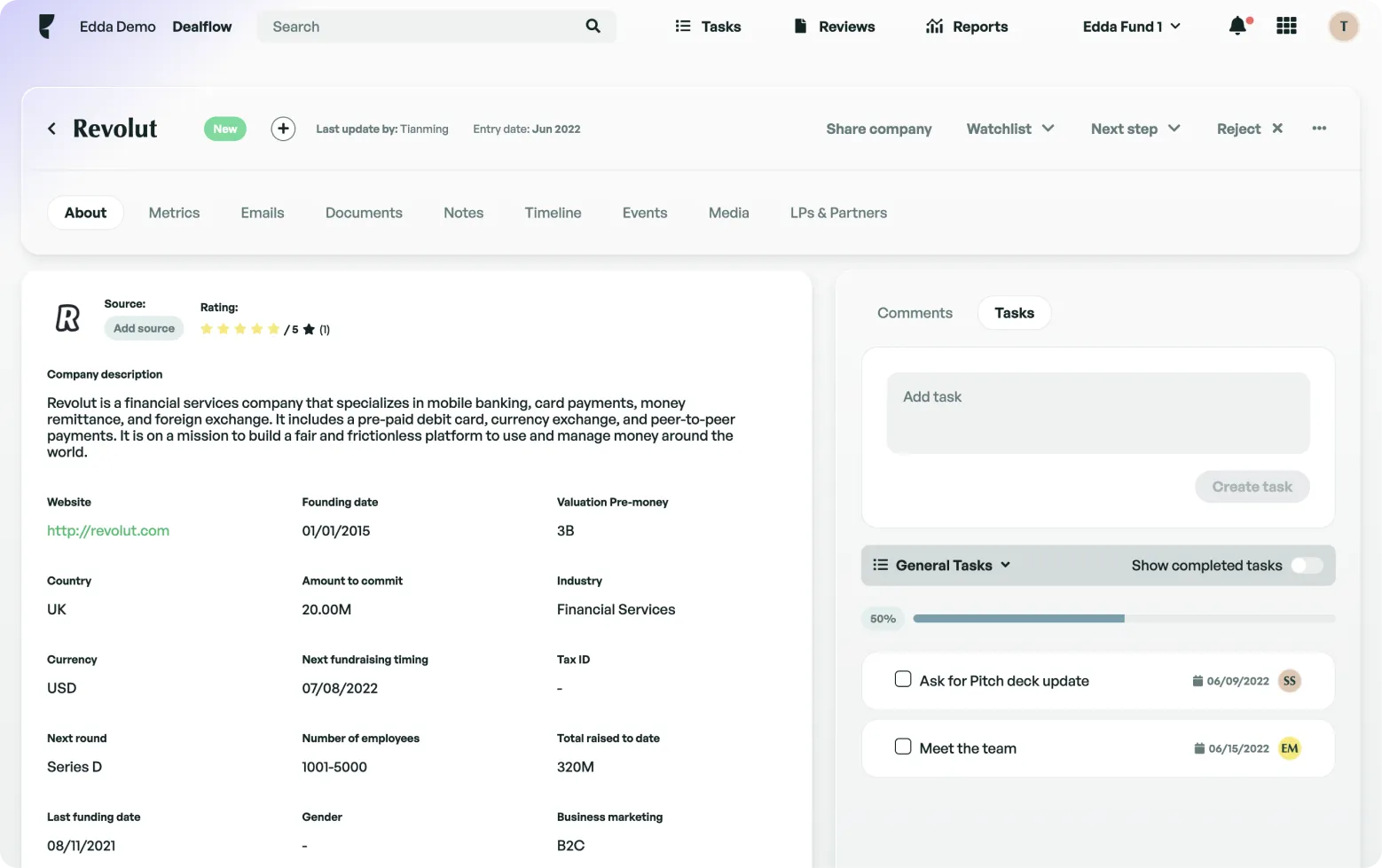
Edda collects data from public sources (e.g. Crunchbase, Pitchbook) and private sources (e.g. emails, documents, cloud storage) to provide a complete picture and save you time.

Email Integration
Edda integrates with email and calendars for workflow automation, tracking communication with companies and founders in the platform, and adding events to calendars.

Automated Checklist
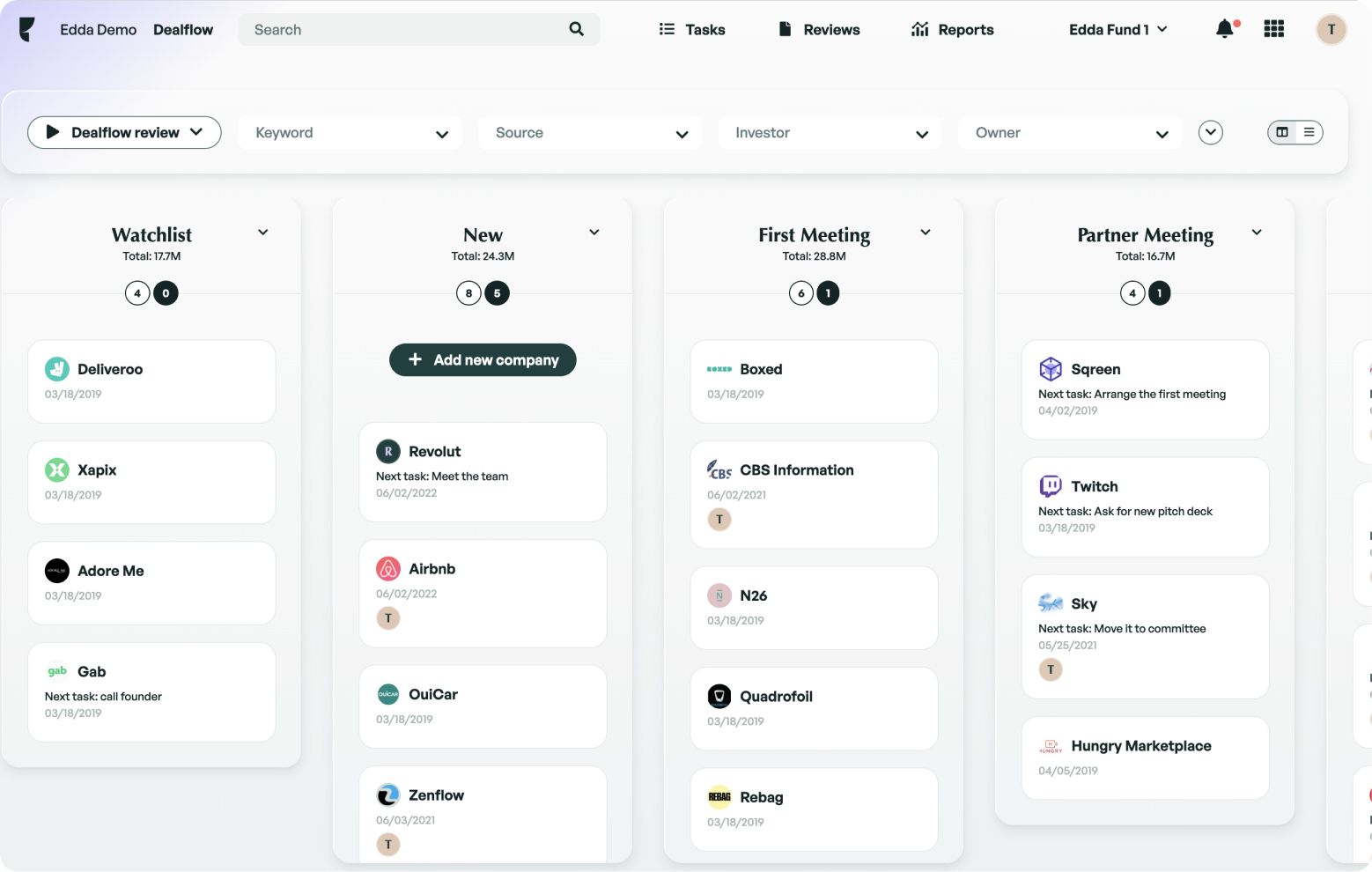
Edda's Watchlist portal keeps your team informed of each potential investment's stage and progress, ensuring that nothing is missed.

Complete Centralisation
As a central point for all investment information, Edda keeps LPs up-to-date on deals, generates reports, shares statistics, and stores data and documentation.
EMBRACE THE FUTURE
Edda is the future of fund management, delivering a smart and collaborative tool for the investors of tomorrow, today. We’ll help you save over 30% of your time, capitalise on existing opportunities, and discover new ones.
Request a demoThe Need for Unified Investment Management Software
Venture capital and private equity firms operate in a high-stakes environment where efficiency and accuracy are non-negotiable. Traditional workflows rely on fragmented tools—spreadsheets, standalone CRMs, and manual reporting systems—that create silos and increase operational risk. An investment management platform eliminates these inefficiencies by consolidating deal sourcing, portfolio tracking, investor relations, and reporting into a single system. This integration ensures data consistency, reduces manual errors, and accelerates decision-making.
For firms managing multiple funds or strategies, the complexity multiplies. A unified fund management platform provides real-time visibility into performance, cash flows, and investor commitments. It also standardizes processes across teams, ensuring compliance with internal policies and external regulations. The right software becomes a strategic asset, not just a back-office tool.
Core Components of a Modern Investment Management Platform
Effective investment management software must address the entire investment lifecycle, from origination to exit. The most critical modules include:
Dealflow management streamlines sourcing, screening, and pipeline tracking. It replaces manual spreadsheets with automated workflows, allowing teams to prioritize high-potential opportunities. Features like customizable scoring models and AI-assisted due diligence help firms focus on deals that align with their thesis.
Portfolio management provides granular tracking of holdings, valuations, and performance metrics. Firms can monitor KPIs, generate LP reports, and model exit scenarios without switching between tools. Integration with cap table data ensures accuracy in ownership calculations and waterfall distributions.
CRM functionality centralizes investor and founder relationships. Unlike generic CRMs, a purpose-built system for VC and PE captures fund-specific data, such as LP commitments, co-investor networks, and follow-on investment histories. This context enables more strategic outreach and reduces the risk of missed opportunities.
LP and partner portals facilitate secure collaboration. Investors gain self-service access to reports, capital calls, and performance updates, while internal teams share documents and notes in a centralized hub. This transparency strengthens trust and reduces administrative overhead.
AI and Automation in Investment Management
Artificial intelligence is transforming how firms evaluate opportunities and manage portfolios. HERA.I, Edda’s proprietary AI suite, delivers four concrete modules that address common pain points:
The Pitch Deck Reader extracts key data from decks in seconds, reducing the time spent on initial screenings. The Cap Table Importer automates the ingestion of ownership structures, eliminating manual data entry. The Due Diligence Assistant flags potential risks in term sheets and legal documents, while the Decision Writer generates personalized rejection letters, saving hours of manual drafting.
These tools are not speculative features but deployed capabilities that integrate seamlessly with the broader platform. Unlike competitors that announce AI without tangible deliverables, HERA.I provides immediate value by automating repetitive tasks and surfacing insights from unstructured data.
Tailoring the Platform to Different Firm Types
Venture capital, private equity, and corporate venture capital (CVC) firms have distinct needs, and a one-size-fits-all approach falls short. For VC firms, the focus is on dealflow velocity and portfolio support. Mid-market PE firms prioritize operational efficiency and LP reporting, while CVCs require tools that bridge the gap between corporate strategy and startup investing.
Edda’s platform is designed to adapt to these differences. For example, CVCs benefit from customizable dashboards that align with corporate KPIs, while VC firms leverage AI-driven sourcing to identify emerging trends. The flexibility to configure workflows, reports, and permissions ensures the software scales with the firm’s growth.
Integration and Ecosystem Compatibility
No investment management platform operates in isolation. Firms rely on a mix of data providers, communication tools, and productivity suites. Edda’s integration ecosystem includes PitchBook, Crunchbase, and Dealroom for market intelligence, as well as Slack, Microsoft Teams, and Outlook for collaboration. Cloud storage integrations with Google Drive and Dropbox ensure seamless document management, while Zapier and Typeform enable custom workflows.
These integrations reduce friction by eliminating the need to switch between tools. Data flows automatically between systems, ensuring teams always work with the most up-to-date information. This interoperability is critical for firms that depend on real-time insights to make investment decisions.
FAQ
How does investment management software differ from generic CRM or portfolio tools?
Generic CRMs and portfolio tools lack the domain-specific functionality required by VC and PE firms. For example, a standard CRM cannot track LP commitments or model carried interest distributions. Similarly, portfolio tools designed for public markets do not account for the illiquidity and long holding periods of private investments. Investment management software combines relationship management, deal tracking, and portfolio monitoring in a single platform tailored to the unique workflows of alternative asset managers.
Edda’s platform goes further by automating the transition of data between modules. A deal marked as "Invested" in the Dealflow module automatically populates the Portfolio module, eliminating manual data re-entry. This end-to-end integration is a key differentiator from fragmented stacks.
What are the key features to look for in fund management software?
The most critical features depend on the firm’s strategy and stage. For early-stage VC firms, dealflow automation and AI-assisted sourcing are priorities. Mid-market PE firms may prioritize LP reporting and waterfall calculations, while CVCs need tools that align with corporate governance requirements.
Regardless of focus, all firms benefit from real-time dashboards, customizable reporting, and secure collaboration tools. Edda’s platform includes these core features, along with HERA.I’s AI modules, which automate due diligence and document processing. Integration capabilities are also essential, as firms rely on external data sources and communication tools to operate efficiently.
How does Edda’s platform address the needs of corporate venture capital (CVC) firms?
CVCs face unique challenges, including aligning startup investments with corporate strategy and managing internal stakeholders. Edda’s platform is the only solution that treats CVC as a dedicated segment, offering features like customizable dashboards that reflect corporate KPIs and workflows that bridge the gap between venture and corporate teams.
The CRM module captures both LP and corporate relationships, ensuring all stakeholders have access to relevant data. The Portal facilitates secure collaboration between CVC teams and portfolio companies, while integration with corporate tools like Microsoft Teams and Outlook ensures seamless communication.
Is investment management software suitable for firms of all sizes?
Yes, but the implementation approach varies. First-time GPs may start with core modules like dealflow and portfolio tracking, while established firms require advanced features like multi-fund reporting and LP portal customization. Edda’s platform scales with the firm, offering four plans (First-Time GP, Premium, Pro, Enterprise) that align with different stages of growth.
For smaller firms, the focus is on reducing manual work and improving data accuracy. Larger firms prioritize automation and integration to handle complex workflows. Edda’s modular design allows firms to adopt features incrementally, ensuring the platform evolves alongside their needs.
What security and compliance measures does Edda implement?
Edda adheres to SOC 2 Type II standards and is GDPR-compliant, ensuring data security and privacy. The platform offers role-based access controls, audit logs, and encryption for data at rest and in transit. These measures are critical for firms handling sensitive financial and investor data.
Additionally, Edda’s 99.99% SLA guarantees uptime, minimizing disruptions to critical workflows. For firms subject to regulatory scrutiny, the platform’s compliance features provide peace of mind, allowing them to focus on investment decisions rather than administrative overhead.
The Need for Unified Investment Management Software
Venture capital and private equity firms operate in a high-stakes environment where efficiency and accuracy are non-negotiable. Traditional workflows rely on fragmented tools—spreadsheets, standalone CRMs, and manual reporting systems—that create silos and increase operational risk. An investment management platform eliminates these inefficiencies by consolidating deal sourcing, portfolio tracking, investor relations, and reporting into a single system. This integration ensures data consistency, reduces manual errors, and accelerates decision-making.
For firms managing multiple funds or strategies, the complexity multiplies. A unified fund management platform provides real-time visibility into performance, cash flows, and investor commitments. It also standardizes processes across teams, ensuring compliance with internal policies and external regulations. The right software becomes a strategic asset, not just a back-office tool.
Core Components of a Modern Investment Management Platform
Effective investment management software must address the entire investment lifecycle, from origination to exit. The most critical modules include:
Dealflow management streamlines sourcing, screening, and pipeline tracking. It replaces manual spreadsheets with automated workflows, allowing teams to prioritize high-potential opportunities. Features like customizable scoring models and AI-assisted due diligence help firms focus on deals that align with their thesis.
Portfolio management provides granular tracking of holdings, valuations, and performance metrics. Firms can monitor KPIs, generate LP reports, and model exit scenarios without switching between tools. Integration with cap table data ensures accuracy in ownership calculations and waterfall distributions.
CRM functionality centralizes investor and founder relationships. Unlike generic CRMs, a purpose-built system for VC and PE captures fund-specific data, such as LP commitments, co-investor networks, and follow-on investment histories. This context enables more strategic outreach and reduces the risk of missed opportunities.
LP and partner portals facilitate secure collaboration. Investors gain self-service access to reports, capital calls, and performance updates, while internal teams share documents and notes in a centralized hub. This transparency strengthens trust and reduces administrative overhead.
AI and Automation in Investment Management
Artificial intelligence is transforming how firms evaluate opportunities and manage portfolios. HERA.I, Edda’s proprietary AI suite, delivers four concrete modules that address common pain points:
The Pitch Deck Reader extracts key data from decks in seconds, reducing the time spent on initial screenings. The Cap Table Importer automates the ingestion of ownership structures, eliminating manual data entry. The Due Diligence Assistant flags potential risks in term sheets and legal documents, while the Decision Writer generates personalized rejection letters, saving hours of manual drafting.
These tools are not speculative features but deployed capabilities that integrate seamlessly with the broader platform. Unlike competitors that announce AI without tangible deliverables, HERA.I provides immediate value by automating repetitive tasks and surfacing insights from unstructured data.
Tailoring the Platform to Different Firm Types
Venture capital, private equity, and corporate venture capital (CVC) firms have distinct needs, and a one-size-fits-all approach falls short. For VC firms, the focus is on dealflow velocity and portfolio support. Mid-market PE firms prioritize operational efficiency and LP reporting, while CVCs require tools that bridge the gap between corporate strategy and startup investing.
Edda’s platform is designed to adapt to these differences. For example, CVCs benefit from customizable dashboards that align with corporate KPIs, while VC firms leverage AI-driven sourcing to identify emerging trends. The flexibility to configure workflows, reports, and permissions ensures the software scales with the firm’s growth.
Integration and Ecosystem Compatibility
No investment management platform operates in isolation. Firms rely on a mix of data providers, communication tools, and productivity suites. Edda’s integration ecosystem includes PitchBook, Crunchbase, and Dealroom for market intelligence, as well as Slack, Microsoft Teams, and Outlook for collaboration. Cloud storage integrations with Google Drive and Dropbox ensure seamless document management, while Zapier and Typeform enable custom workflows.
These integrations reduce friction by eliminating the need to switch between tools. Data flows automatically between systems, ensuring teams always work with the most up-to-date information. This interoperability is critical for firms that depend on real-time insights to make investment decisions.
FAQ
How does investment management software differ from generic CRM or portfolio tools?
Generic CRMs and portfolio tools lack the domain-specific functionality required by VC and PE firms. For example, a standard CRM cannot track LP commitments or model carried interest distributions. Similarly, portfolio tools designed for public markets do not account for the illiquidity and long holding periods of private investments. Investment management software combines relationship management, deal tracking, and portfolio monitoring in a single platform tailored to the unique workflows of alternative asset managers.
Edda’s platform goes further by automating the transition of data between modules. A deal marked as "Invested" in the Dealflow module automatically populates the Portfolio module, eliminating manual data re-entry. This end-to-end integration is a key differentiator from fragmented stacks.
What are the key features to look for in fund management software?
The most critical features depend on the firm’s strategy and stage. For early-stage VC firms, dealflow automation and AI-assisted sourcing are priorities. Mid-market PE firms may prioritize LP reporting and waterfall calculations, while CVCs need tools that align with corporate governance requirements.
Regardless of focus, all firms benefit from real-time dashboards, customizable reporting, and secure collaboration tools. Edda’s platform includes these core features, along with HERA.I’s AI modules, which automate due diligence and document processing. Integration capabilities are also essential, as firms rely on external data sources and communication tools to operate efficiently.
How does Edda’s platform address the needs of corporate venture capital (CVC) firms?
CVCs face unique challenges, including aligning startup investments with corporate strategy and managing internal stakeholders. Edda’s platform is the only solution that treats CVC as a dedicated segment, offering features like customizable dashboards that reflect corporate KPIs and workflows that bridge the gap between venture and corporate teams.
The CRM module captures both LP and corporate relationships, ensuring all stakeholders have access to relevant data. The Portal facilitates secure collaboration between CVC teams and portfolio companies, while integration with corporate tools like Microsoft Teams and Outlook ensures seamless communication.
Is investment management software suitable for firms of all sizes?
Yes, but the implementation approach varies. First-time GPs may start with core modules like dealflow and portfolio tracking, while established firms require advanced features like multi-fund reporting and LP portal customization. Edda’s platform scales with the firm, offering four plans (First-Time GP, Premium, Pro, Enterprise) that align with different stages of growth.
For smaller firms, the focus is on reducing manual work and improving data accuracy. Larger firms prioritize automation and integration to handle complex workflows. Edda’s modular design allows firms to adopt features incrementally, ensuring the platform evolves alongside their needs.
What security and compliance measures does Edda implement?
Edda adheres to SOC 2 Type II standards and is GDPR-compliant, ensuring data security and privacy. The platform offers role-based access controls, audit logs, and encryption for data at rest and in transit. These measures are critical for firms handling sensitive financial and investor data.
Additionally, Edda’s 99.99% SLA guarantees uptime, minimizing disruptions to critical workflows. For firms subject to regulatory scrutiny, the platform’s compliance features provide peace of mind, allowing them to focus on investment decisions rather than administrative overhead.