Unite Partners on Portal
Designed for connection, transparency, and trust, Portal allows you to build enduring and successful LP - GP relationships.
Investors in 40 countries manage $300B in assets on Edda






A centralized space for LPs and GPs
Effortlessly share updates from a consistent single source of truth
Visibility for your performance
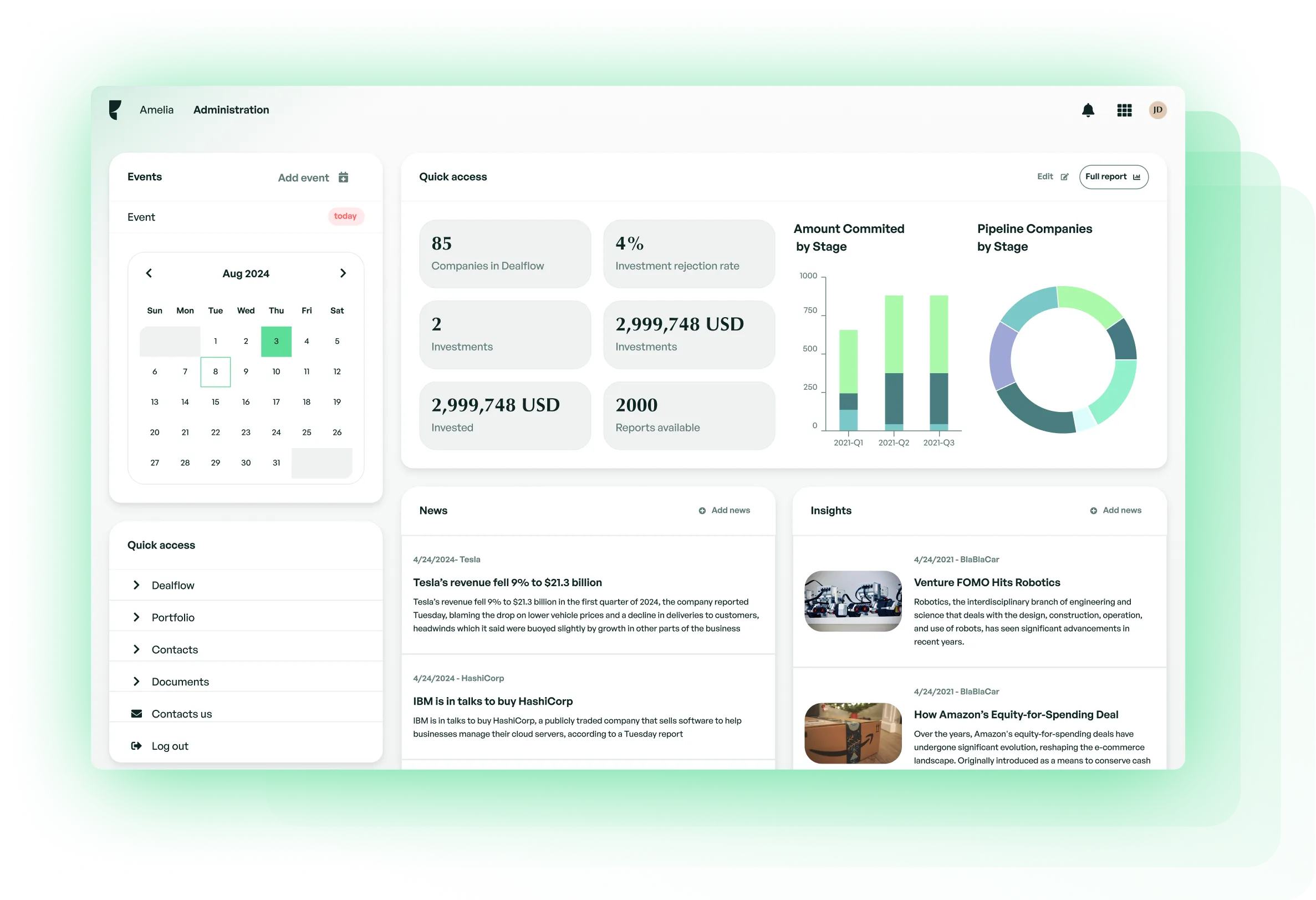
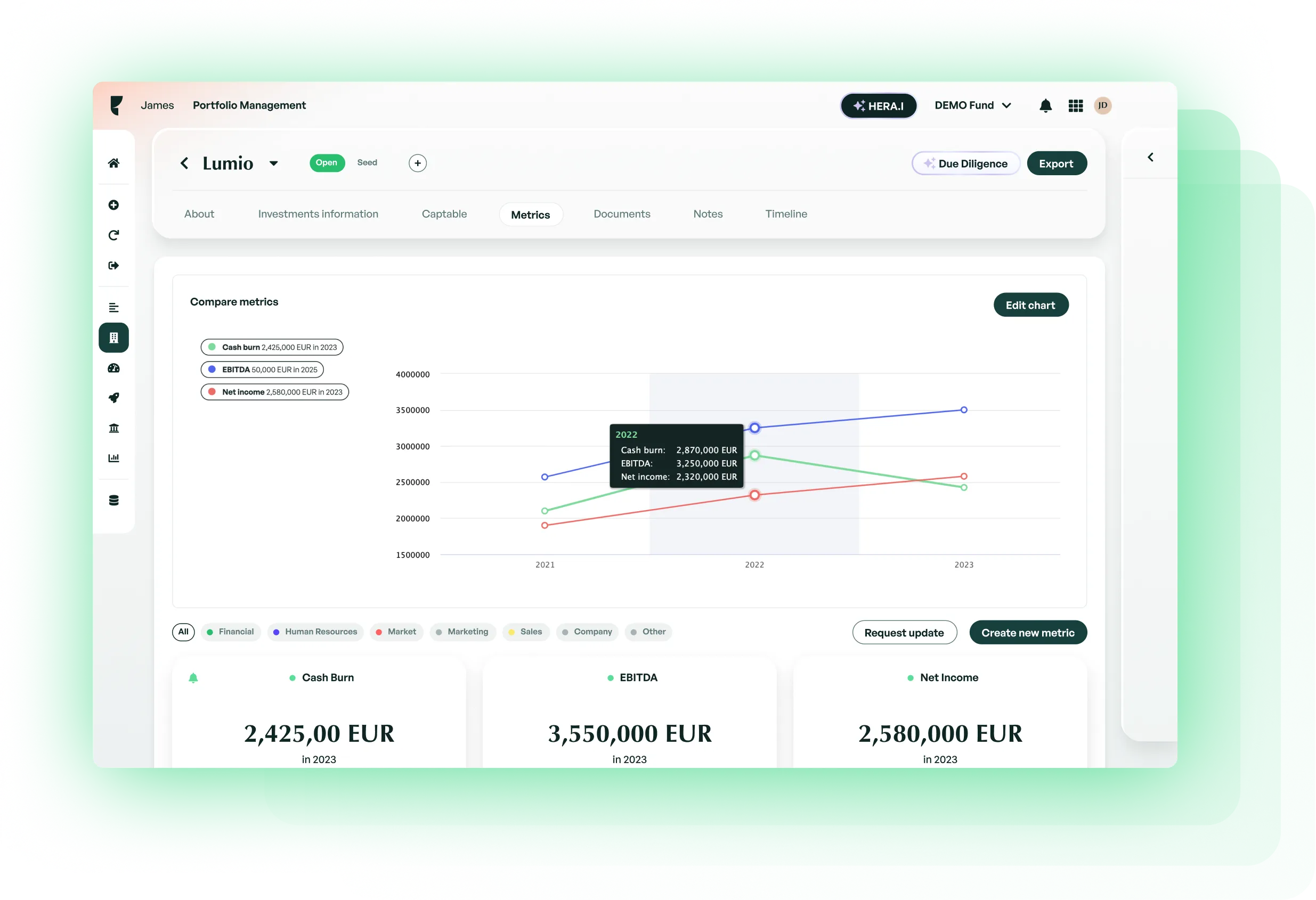
Facilitate communication with your LPs through Portal’s shared dashboard. Key data from your other Edda modules is synthesized and organized to provide your LPs with effortless updates.
Neatly share reports and documents
Metrics, LP reports, and documents are always in the same place with Edda Portal. Ensure that every file is shown to the right audience with customizable access.
Grant precise permissions
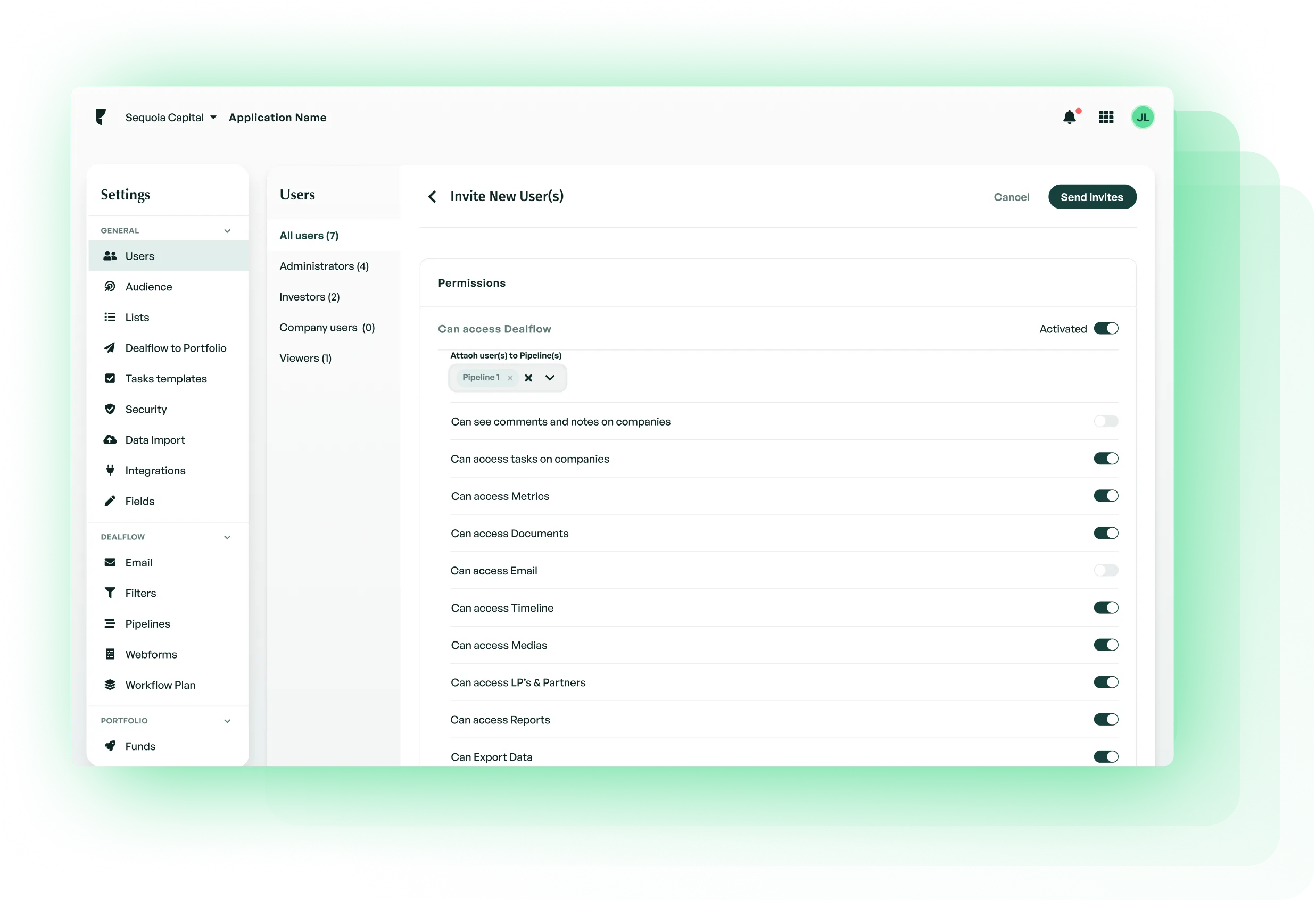
Control the accessibility of every element in Edda Portal. Our fully customizable permissions helps you share relevant updates to exactly who needs them.
What our users say about us
“We have integrated Edda into the Back/Middle Office and Business Development teams in order to accurately communicate up-to-date information to our LPs and our ecosystem.”

Louis Sutre

- France
“We have integrated Edda into the Back/Middle Office and Business Development teams in order to accurately communicate up-to-date information to our LPs and our ecosystem.”
Louis Sutre
- France
Interested?
Get started with 
Discover the power of specialized intelligence for your investments.
Discover more from Edda

HERA.I

Dealflow

Portfolio

CRM

Integrations
An investor portal is more than a secure document repository—it is the primary interface between a venture capital or private equity fund and its limited partners. For general partners, the portal becomes the operational backbone of investor relations software, centralizing performance updates, capital calls, and LP reporting in a single, auditable environment. The challenge lies in balancing transparency with efficiency: LPs demand real-time visibility, while GPs need to maintain control over what is shared, when, and with whom.
The Role of an Investor Portal in Modern Fund Operations
In venture capital and private equity, the relationship between a fund and its limited partners is governed by trust, but trust alone is not scalable. An LP portal formalizes that trust by providing a structured, secure channel for communication and data exchange. Unlike email attachments or shared drives, a dedicated portal ensures that all stakeholders—LPs, GPs, and even co-investors—access the same version of the truth, reducing discrepancies and follow-up requests.
For GPs, the portal eliminates manual processes that consume operational bandwidth. Capital calls, for example, can be initiated, tracked, and acknowledged within the platform, with automated reminders sent to LPs who have not yet responded. Similarly, LP reporting—whether quarterly performance updates or ad-hoc requests—can be generated from live data, ensuring consistency and reducing the risk of errors. This automation is particularly valuable for funds with complex structures, such as corporate venture capital (CVC) units, where reporting requirements may differ across internal and external stakeholders.
Transparency is not just about sharing data; it is about sharing the right data at the right time. A well-designed portal allows GPs to segment information by LP type, investment stage, or even geographic region. For instance, a fund-of-funds LP may require granular details on underlying portfolio companies, while a corporate LP might prioritize sector-specific performance metrics. By tailoring access, GPs can meet diverse expectations without overwhelming LPs with irrelevant information.
Key Features of a Purpose-Built Investor Portal
The functionality of an investor portal should align with the workflows of both GPs and LPs. Below are the core capabilities that distinguish a purpose-built solution from generic file-sharing tools or custom-built portals.
Secure Document Management
An investor portal must provide a secure, centralized repository for all fund-related documents, including pitch decks, financial statements, and legal agreements. Unlike consumer-grade cloud storage, a purpose-built portal enforces role-based access controls, ensuring that LPs only see the documents relevant to their commitments. For example, a limited partner in a specific fund should not have access to documents from other funds managed by the same GP. Additionally, the portal should support versioning, so that updates to documents—such as revised financial projections—are automatically propagated without creating confusion over which version is current.
Automated Capital Call and Distribution Workflows
Managing capital calls and distributions manually is error-prone and time-consuming. An investor portal automates these workflows, allowing GPs to generate call notices, track responses, and reconcile payments against commitments. For LPs, the portal provides a clear record of all calls and distributions, including timestamps and acknowledgment receipts. This transparency reduces disputes and streamlines reconciliation, particularly for LPs managing multiple fund commitments. The portal should also integrate with the fund’s portfolio tracking system, ensuring that capital call calculations reflect the latest investment activity.
Real-Time Performance Reporting
LPs expect timely, accurate updates on fund performance, but generating these reports manually is a resource-intensive process. An investor portal should pull data directly from the fund’s portfolio management system, ensuring that performance metrics—such as IRR, MOIC, and cash flow—are always up to date. The portal should also support customizable dashboards, allowing LPs to view performance at the fund, sector, or individual company level. For GPs, this reduces the burden of ad-hoc reporting requests, as LPs can self-serve the information they need.
Collaboration and Communication Tools
An investor portal should facilitate two-way communication between GPs and LPs. Features such as secure messaging, document annotation, and task tracking enable LPs to ask questions, request additional information, or flag issues directly within the platform. For GPs, this centralizes all LP interactions, reducing the risk of miscommunication or overlooked requests. The portal should also support bulk communications, such as newsletters or event invitations, ensuring that all LPs receive consistent updates.
Why Generic Tools Fall Short for Investor Relations
Many funds initially rely on generic tools—such as email, shared drives, or general-purpose CRMs—to manage investor relations. While these tools may suffice for early-stage funds, they quickly become inadequate as the fund scales. Below are the limitations of generic solutions and why a dedicated investor relations software is necessary.
Lack of Integration with Fund Workflows
Generic tools are not designed to integrate with the unique workflows of venture capital and private equity. For example, a CRM like Salesforce may track LP contacts, but it cannot automate capital calls or generate performance reports tied to the fund’s portfolio. Similarly, shared drives like Google Drive or Dropbox lack the security controls and audit trails required for sensitive fund documents. A purpose-built portal, by contrast, integrates seamlessly with the fund’s dealflow and dealflow management systems, ensuring that data flows automatically between stages of the investment lifecycle.
Inadequate Security and Compliance
Investor relations involve handling highly sensitive information, including financial data, legal agreements, and personal details of LPs. Generic tools often lack the security features required to protect this information, such as role-based access controls, encryption, and audit logs. Additionally, funds operating in multiple jurisdictions must comply with regulations like GDPR, which impose strict requirements on data storage and access. A dedicated investor portal is designed with these compliance needs in mind, providing the necessary safeguards to protect both the fund and its LPs.
Limited Scalability
As a fund grows, so does the complexity of its investor relations. A fund with 10 LPs may manage communications via email, but a fund with 100 LPs will struggle to maintain consistency and accuracy. Generic tools are not built to scale with the fund’s needs, leading to inefficiencies and errors. A purpose-built portal, on the other hand, is designed to handle large volumes of data and users, ensuring that the fund can grow without outgrowing its tools.
The Business Case for an Investor Portal
For general partners, the decision to adopt an investor portal is not just about improving efficiency—it is about strengthening the fund’s relationship with its LPs. Below are the key business benefits of implementing a dedicated portal.
Enhanced LP Satisfaction and Retention
LPs value transparency and responsiveness. A well-designed portal provides both, giving LPs real-time access to the information they need while reducing the administrative burden on GPs. This transparency builds trust, which is critical for securing follow-on commitments and referrals. Additionally, a portal can serve as a differentiator for funds competing for LP capital, particularly in crowded markets like corporate venture capital, where LPs may have multiple options.
Operational Efficiency and Cost Savings
Manual processes for LP reporting, capital calls, and document management are time-consuming and prone to errors. An investor portal automates these tasks, freeing up operational resources to focus on higher-value activities, such as deal sourcing and portfolio management. Over time, this efficiency translates into cost savings, as the fund can scale without proportionally increasing its headcount.
Improved Fundraising and Marketing
A portal can also serve as a marketing tool for the fund. Prospective LPs often request sample reports or performance data during the fundraising process. With a portal, GPs can provide controlled access to this information, demonstrating the fund’s professionalism and operational maturity. Additionally, the portal can be used to share thought leadership content, such as whitepapers or event recordings, positioning the fund as a leader in its sector.
Risk Mitigation and Compliance
Regulatory requirements for venture capital and private equity funds are becoming increasingly stringent. An investor portal helps mitigate compliance risks by providing a centralized, auditable record of all LP interactions. This is particularly important for funds with LPs in multiple jurisdictions, where regulatory requirements may vary. By maintaining a complete history of communications, documents, and transactions, the portal ensures that the fund can demonstrate compliance with applicable laws and regulations.
FAQ
What is the difference between an investor portal and a general-purpose CRM?
An investor portal is a specialized tool designed specifically for the needs of venture capital and private equity funds. Unlike a general-purpose CRM, which focuses on contact management and sales pipelines, an investor portal is built to handle the unique workflows of fund operations, such as capital calls, LP reporting, and performance tracking. For example, while a CRM may track LP contacts, it cannot automate the generation of capital call notices or reconcile payments against commitments. Additionally, an investor portal integrates with the fund’s portfolio management system, ensuring that performance data is always up to date and accurate.
How does an investor portal improve LP relations?
An investor portal improves LP relations by providing transparency, efficiency, and responsiveness. LPs gain real-time access to performance data, documents, and communications, reducing the need for ad-hoc requests and follow-ups. For GPs, the portal automates routine tasks, such as generating reports or tracking capital call responses, freeing up time to focus on strategic initiatives. Additionally, the portal provides a centralized record of all LP interactions, ensuring that nothing falls through the cracks. This level of transparency and efficiency builds trust, which is critical for maintaining strong LP relationships.
For funds with complex structures, such as corporate venture capital units, the portal can also segment information by LP type, ensuring that each LP receives the data most relevant to their needs. This tailored approach further enhances LP satisfaction and reduces the risk of miscommunication.
Can an investor portal integrate with other fund management tools?
Yes, a purpose-built investor portal is designed to integrate with other fund management tools, such as dealflow systems, portfolio trackers, and accounting software. For example, Edda’s portal integrates seamlessly with its portfolio management system, ensuring that performance data is automatically updated and synchronized. This integration eliminates the need for manual data entry, reducing errors and saving time.
Additionally, the portal can integrate with third-party tools, such as PitchBook or Crunchbase, to pull in market data or company information. This ensures that LPs have access to the most relevant and up-to-date information, without requiring GPs to manually compile and distribute reports. For funds using multiple tools, integration is critical for maintaining data consistency and operational efficiency.
What security features should an investor portal include?
An investor portal must include robust security features to protect sensitive fund and LP data. These features should include:
Role-Based Access Controls: Ensure that LPs and GPs only have access to the information relevant to their roles. For example, a limited partner in a specific fund should not have access to documents from other funds managed by the same GP.
Encryption: All data transmitted and stored within the portal should be encrypted, both in transit and at rest. This protects against unauthorized access and data breaches.
Audit Logs: The portal should maintain a complete record of all user activity, including logins, document access, and changes to data. This ensures accountability and helps with compliance.
Multi-Factor Authentication (MFA): Require users to verify their identity through multiple methods, such as a password and a one-time code sent to their mobile device. This adds an extra layer of security against unauthorized access.
Compliance with Regulations: The portal should comply with relevant regulations, such as GDPR, which impose strict requirements on data storage, access, and processing. This is particularly important for funds with LPs in multiple jurisdictions.
How does Edda’s investor portal differ from competitors?
Edda’s investor portal is part of an end-to-end platform designed specifically for venture capital and private equity firms. Unlike standalone portals or generic tools, Edda integrates seamlessly with the fund’s dealflow, portfolio, and CRM systems, ensuring that data flows automatically between stages of the investment lifecycle. This integration eliminates silos and reduces the need for manual data entry, improving efficiency and accuracy.
Additionally, Edda’s portal is built with the unique needs of venture capital and private equity in mind. For example, it supports automated capital calls and distributions, real-time performance reporting, and secure document management—features that are not available in generic CRMs or file-sharing tools. Edda also offers dedicated support for corporate venture capital (CVC) units, a segment that is often underserved by other providers.
Finally, Edda’s portal is backed by a proprietary AI suite, HERA.I, which enhances functionality with modules like the Pitch Deck Reader and Due Diligence Assistant. These tools help GPs streamline workflows and make data-driven decisions, further differentiating Edda from competitors that offer AI as a vague promise rather than a concrete feature.